Your child doesn’t need “children’s food”. They need real food.
“Fortified” cereal, a carton of juice, a bar with a bear on the wrapper, fish fingers. Every one of these products promises it’s healthy and light, and together they keep a child on fuel that throws their mood, sleep and immunity out of kilter. Children today get most of their calories from ultra-processed food, not from a home-made broth.
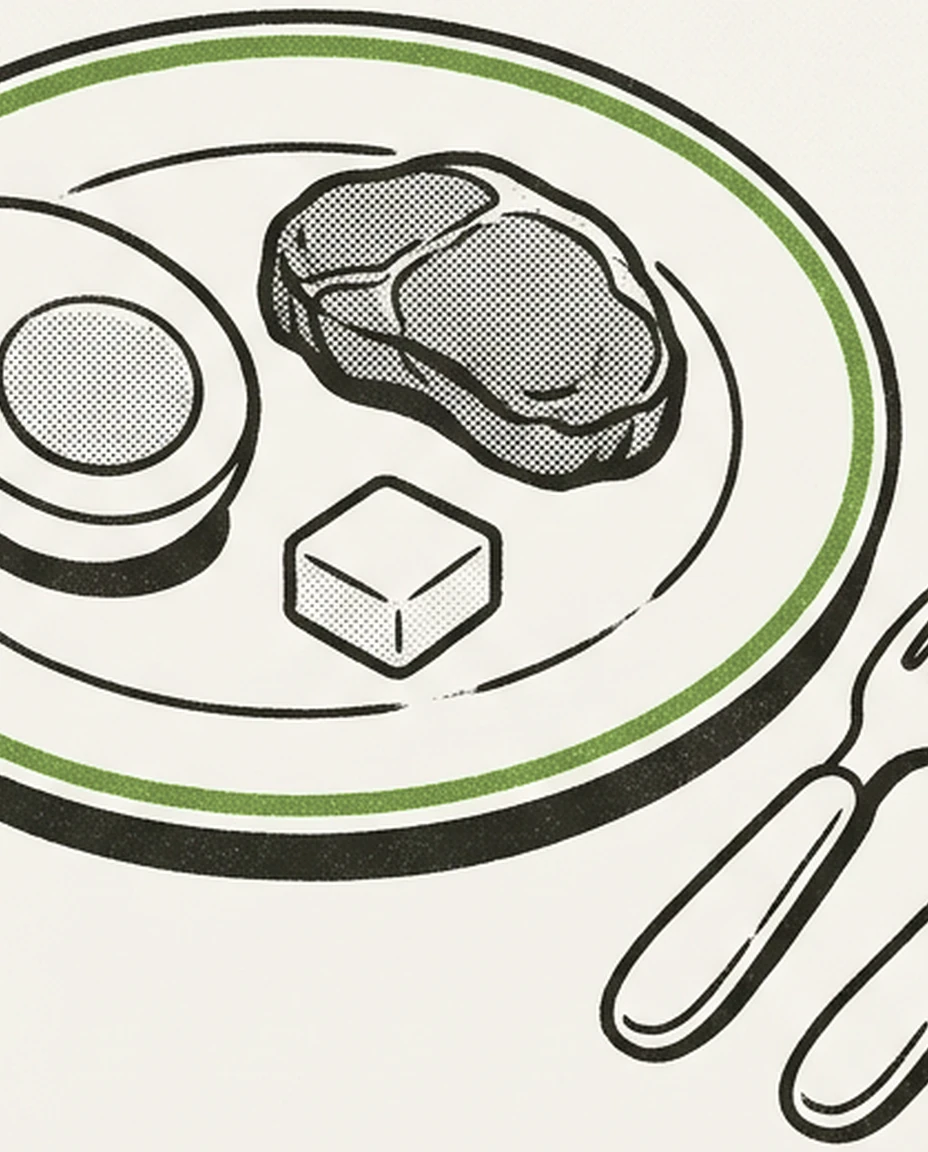
You feed your child with a sense that you’re doing right, because every wrapper carries a promise: healthy, light, for children, with fibre. And the little one is irritable anyway, has mood swings and keeps demanding something sweet.
They catch one infection after another, a constant runny nose, cough, ear infections. They fall asleep badly and sleep restlessly. For dinner they’ll only eat “white things”, avoiding meat, eggs and fat, and you’re told that “they eat too much meat anyway”.
It isn’t your fault. It’s the result of an environment in which the cheapest and most loudly advertised is exactly what harms a growing body most.
“Give a child light and lean food, fat is heavy.”
This is one of the most dangerous myths in children’s nutrition. A child’s brain is built from fat and cholesterol, and nature’s pattern, mother’s milk, is fatty and contains cholesterol. By stripping the fat from a growing child’s diet, you take away their building material for the brain, bones and hormones, and in exchange you pile on sugar and seed oils, which fire off that development.
There’s another way. It starts with one change of thinking: you don’t limit a child’s real food, you remove what throws them out of kilter.
This isn’t a guide about miracles or “fixing a child in two weeks”. It’s a practical guide: how to understand what real food does in a growing body, and how to reset a child’s plate without a war at the table. No magic, no scaremongering, no imposing restrictive diets on a little one. No fasts, no skipped meals and no carb-counting in a child. A child should eat their fill of real food.
Inside, I break down what children’s nutrition often stays quiet about:
- ●
Childhood is the building of a brain. The brain is a fatty organ, so eggs, butter and fatty meat are literally bricks for that brain. Chang, among others, described the role of essential fatty acids in its development.
- ●
Nature already answered which fat. Mother’s milk is rich in saturated fats and contains cholesterol, exactly what adults are told to limit. German described the composition of human milk.
- ●
Choline genuinely builds the brain. Choline from yolks and liver supports a child’s information processing and sustained attention, with an effect visible years later (the work of Caudill and Bahnfleth).
- ●
Sugar blunts immunity. Sugar weakens the ability of white blood cells to fight microbes (Sanchez), and vitamin D reduces that risk (Martineau).
- ●
Seed oils are poorer fuel. Oxidised linoleic acid from seed oils drives inflammation in a body under construction (DiNicolantonio).
What's inside
- ✓
An “is this your child?” test — a short picture of symptoms to tick off, from snacking to recurring infections.
- ✓
A step-by-step plan — first you remove what fires things off (sugar, juices, seed oils, “children’s food”), then you add what builds (eggs, meat, liver, animal fats), and you treat supplements as a top-up at the end.
- ✓
Four scenarios — the baby, the fussy eater on “white things”, the child who’s constantly ill, and the teenager. Because “a child” isn’t one single case.
- ✓
Supplements in children’s doses — with rough ranges and the skill of reading labels (form and purity, not the brand name), with a hard warning about iron.
- ✓
A markers table — what to ask for in a child and how to read the results: the lab “normal” versus the optimum, with the caveat that in children the ranges depend on age.
- ✓
A printable tests checklist — you take to your GP or to the lab.
- ✓
A 30-day plan — week by week, from removing the liquid sugar to a tied-together rhythm of meals, sleep and movement.
- ✓
A shopping list to start — what goes in the basket, what to bin from the cupboard.
This is for you if
- ✓your child lives mainly on products from packets, is irritable and has mood swings
- ✓catches one infection after another or sleeps badly
- ✓only eats “white things” and avoids meat, eggs and fat
- ✓you want to reset the whole family’s plate to real food, but you’re lost in conflicting advice
This isn't for you if
- ✕you’re after a miracle supplement instead of a change on the plate
- ✕you want a ready-made elimination diet for a child with a condition without understanding why and under whose supervision (that’s run with a doctor, not a guide)
Nutrition is the foundation of a child’s health, not an experiment to run on your own. In the guide you have clear red flags where food steps into the background and the first move belongs to a doctor, sometimes urgently: the child isn’t growing or is losing weight, loses skills they already had, has signs of deficiencies or extreme selectivity with weight loss. A baby under one year old is a separate, most cautious situation: no honey before the first birthday (infant botulism), cow’s milk isn’t a drink for a baby, you discuss every decision with your GP or health visitor. Iron is given to a child only after tests and with monitoring, never “just in case”, because an excess risks dangerous poisoning. Don’t impose restrictive or elimination diets on a child on your own, and if the little one has a diagnosed condition, an allergy, a growth disorder or takes medicines, you don’t experiment off your own bat. Naturopathy is a support for a healthy child and never replaces paediatric assessment.
A child is an organism under construction, plastic, responding hungrily to better fuel.
There’s no such thing as “children’s food” in nature, it’s a category invented by industry, not by biology. A child doesn’t need a sweeter, more processed version of food. They need the same real food that built healthy generations for thousands of years. Change the fuel, and in many children the mood, sleep, appetite and immunity come back within a few weeks. It’s not magic, it’s the biology of a growing body.
Children's nutrition — have it right now
The PDF lands in your inbox the moment you pay. Read it on your phone, tablet or computer. Your copy is marked with your details (a named licence), for your own use.
Health begins in the kitchen, and the subject rarely ends with one guide. With the Any three guides bundle you pick any three for less, while All-Access gives you every guide. See the bundles.
“The first material on feeding children that didn’t scare me with anything and didn’t promise anything. It simply explained what to remove, what to add and when to see a doctor. We reset the whole family’s plate without a war at the table.”
A guide hands you the map. If you would rather go through your case with me, with a plan built around your results and your medication, come to a consultation.
See consultations